Joe Satriani Practice Routine: How the Shred Legend Practices Guitar
Discover Joe Satriani's practice routine, teaching methods, and legato techniques. Learn how Satch balances technical mastery with musical expression through structured practice.
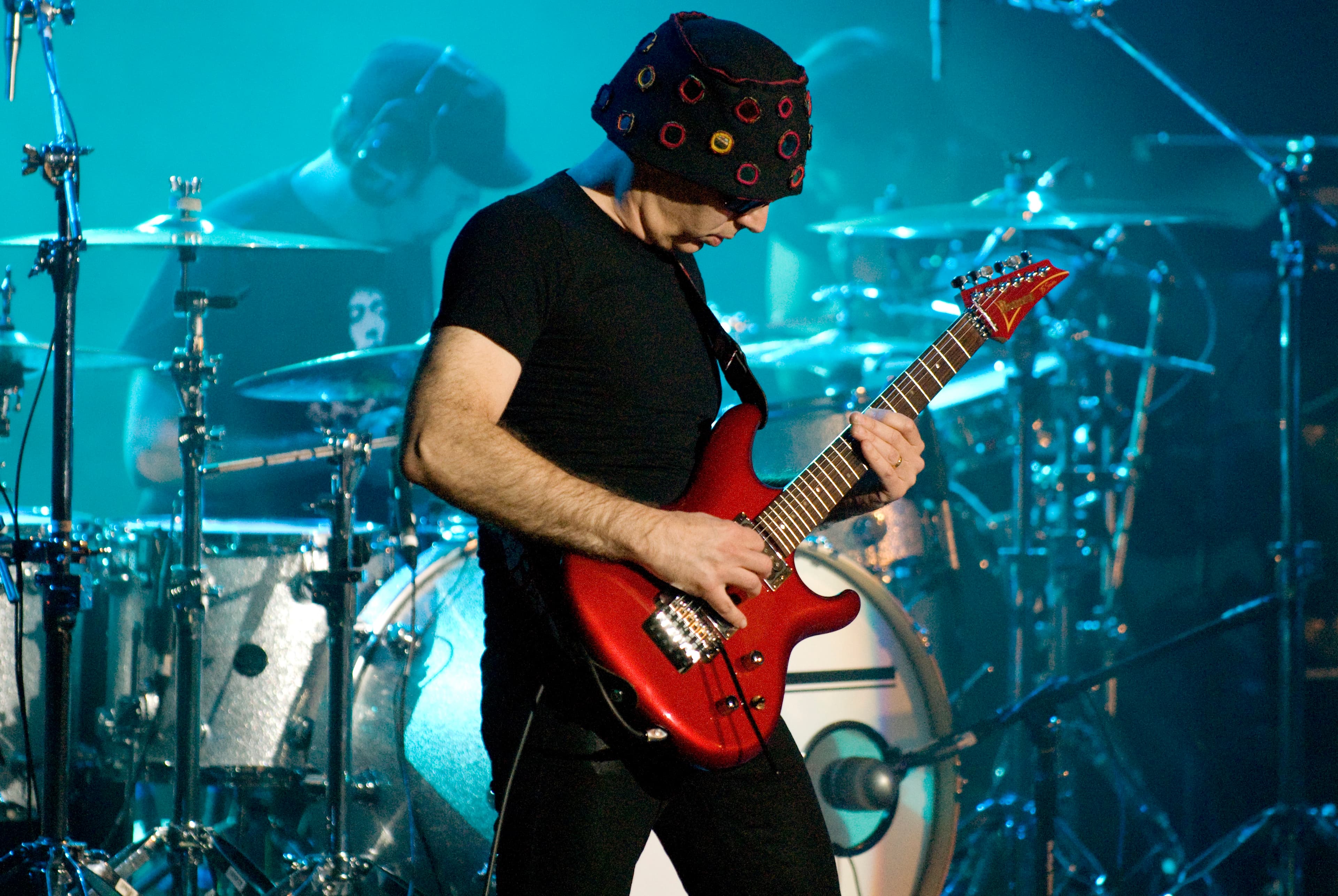
Joe Satriani Practice Routine: How the Shred Legend Practices Guitar
Joe Satriani is more than just a guitar virtuoso—he's a master teacher who shaped some of rock's greatest players, including Steve Vai, Kirk Hammett (Metallica), Larry LaLonde (Primus), and Charlie Hunter. His approach to guitar combines technical precision with musical expression, making him one of the most respected figures in instrumental rock.
What sets Satriani apart isn't just his technique—it's his teaching philosophy: practice should be musical, purposeful, and never boring. In this article, we'll explore how Satch practices, teaches, and thinks about guitar.
In this article, you'll discover:
- Joe Satriani's daily practice routine (1-9 hours depending on the day)
- His teaching philosophy and methods
- Specific techniques: legato, tapping, and scales
- A sample practice routine inspired by Satriani's approach
Joe Satriani's Daily Practice Routine
The Reality: 1 to 9 Hours
According to Rock and Roll Garage's interview with Satriani, his practice schedule varies dramatically based on what he's working on:
"Joe Satriani plays every day for at least an hour, and if he's writing, sometimes plays 8 to 9 hours a day."
Key Insight: Satriani doesn't practice 9 hours every day—he scales his practice based on need. Writing a new album? 8-9 hours. Maintaining chops between tours? 1 hour. Rest days? He takes them when needed.
"He plays every day, unless forced not to—like if he's on a 23-hour flight plan to do a gig, or maybe he's done too much playing and needs to take three days off."
Takeaway: Even world-class players take breaks. Overtraining leads to injury and burnout. Listen to your body.
Pre-Tour Preparation
Before tours, Satriani dedicates six weeks of focused practice to prepare. His approach:
"For songs with difficult elements, he might play one song on one guitar through one rig for 45 minutes, then take 2 hours off, then play for 45 minutes again—to become completely familiar with the technique and create a routine where he gets rid of awkwardness so he can feel comfortable enough to be expressive."
The Strategy:
- Isolate difficult songs and practice them intensively
- Use the exact setup you'll use on tour (same guitar, same amp)
- Practice in focused bursts (45 min on, 2 hours off)
- Focus on comfort and expressiveness, not just accuracy
Satriani's Practice Philosophy
1. "Don't Just Play Exercises—Make Music"
In his Guitar World interview on practice tips, Satriani warns against spending too much time on technical exercises:
"It's important to learn scale patterns, but if you spend all your time doing exercises, pretty soon everything you play will sound like scale patterns."
His advice:
"After a while there's a point where you need to stop practicing exercises and move on, since 'You're not going to sell out theaters or get a billion streams online with finger exercises.' He recommends limiting these routines and keeping them short and productive."
Application: Spend 20-30% of practice time on technique, 70-80% on musical application (songs, improvisation, writing).
2. "Apply Techniques Within Songs"
According to Guitar Player's "Top Ten Tips", Satriani's teaching philosophy centers on real-world application:
"As a teacher, Satriani tries to imagine the best way within each player's musical life to apply different techniques being learned, and if you can work on them within a song or real-world musical application, you're killing two birds with one stone."
Example: Instead of just practicing legato exercises, learn "Satch Boogie" or "Always with Me, Always with You"—songs that force you to use legato musically.
3. "Make Practice Fun"
From his teaching experience documented on Forever Joe:
"He always tried to give his students their money's worth and build their musical knowledge in ways they could grasp and use, and he tried to make the lessons fun because if things got boring, they'd tune out and stop coming."
Key Lesson: If practice feels like a chore, you're doing it wrong. Find ways to make it engaging—play along with songs, improvise over backing tracks, or learn music you genuinely love.
Joe Satriani's Teaching Methods
The "17 Magical First Chords"
When Satriani taught beginning students, he had a systematic approach. According to Guitar Player magazine:
"As a teacher, Satriani would sit down with each first-time student and say they've got to learn the first-position chords, and he had a piece of paper with 17 magical first chords on it."
The List (likely):
- Major: E, A, D, G, C
- Minor: Em, Am, Dm
- Dominant 7ths: E7, A7, D7, G7, C7
- Minor 7ths: Em7, Am7, Dm7
- Suspended: Dsus4, Asus4
His Advice:
"Run through every chord you know, saying if your fingers don't go to a certain place it's because you haven't challenged them, and noting that one day as a teenager he decided to learn every chord in a Joe Pass chord book and worked on it every day with no substitute for bonehead repetition."
Practice Method: Pick 5-10 chords, practice changing between them for 10 minutes daily until it's effortless.
Singing Scales for Ear Training
One of Satriani's most powerful teaching techniques, documented by Guitar Player:
"Satriani instructed students to sing scales to learn the intervals and be able to generate them with their voice in any key, then translate that to the guitar to learn what the spaces between the notes felt like."
How to Practice This:
- Play a major scale slowly on guitar
- Sing along with each note
- Now sing the scale without the guitar
- Play it back on guitar by ear
- Repeat with different keys and scales
Why It Works: If you can sing it, you can play it. This builds the connection between your ear and your fingers.
Learning Note Locations
From Guitar Player's tips collection:
"As an exercise, learn how to locate the note E everywhere, on every string, and once you've mastered that, go on to B, and then the other notes—once you've demystified the placement of notes, you'll be able to move about the neck more freely."
Practice Exercise:
- Day 1: Find all E notes on the fretboard (12 total across 6 strings)
- Day 2: Find all A notes
- Day 3: Find all D notes
- Continue through all 12 notes
- Week 2: Practice jumping between different notes randomly
Joe Satriani's Signature Techniques
1. Legato: The Fluid Connection
Legato is Satriani's calling card—smooth, fluid lines that sound almost vocal. According to Premier Guitar's legato lesson:
"Legato is the use of hammer-ons, pull-offs, and slides to create a smooth and fluid sound. Joe Satriani is an absolute master of legato and has made the technique a part of his signature sound."
Satriani's Legato Approach:
- Uses diatonic lines based around three-note-per-string scale patterns
- Often plays short spurts of legato with long held notes
- Plays over the beat for rhythmic interest
Practice Exercise from Satriani (Guitar World legato tips):
"A repeated symmetrical pattern with three notes per string, picking each string only once and then sounding the next two notes with hammer-ons. You can change the fingering or use chromatic patterns."
Example Pattern:
E string: 12-14-15 (pick, hammer, hammer)
B string: 12-14-15 (pick, hammer, hammer)
G string: 12-14-16 (pick, hammer, hammer)
Key Tip from Satriani:
"Playing anything cleanly and accurately lies in practicing very slowly, in time with a metronome."
2. The Hammer-Hammer-Tap Pattern
A signature Satriani technique documented by Guitar Lessons 365:
"A hybrid technique Satriani employs is the hammer-hammer-tap pattern: Using a hammer-hammer-tap pattern to cover ascending phrases with three-note-per-string scales."
How It Works:
- Hammer-on with index finger
- Hammer-on with ring finger
- Tap with picking hand (typically middle or index finger)
- Creates three notes with minimal picking
Practice Exercise:
- Play a G major scale, three notes per string
- Use hammer-hammer-tap for every string
- Start at 60 BPM (very slow)
- Increase by 5 BPM when perfect
- Work up to 120+ BPM
3. Two-Hand Tapping
Satriani pioneered melodic tapping in the 1980s. According to Guitar Lessons 365, his tapping approach focuses on:
- Melodic lines (not just showy patterns)
- Arpeggios tapped across the fretboard
- Combining tapping with legato for hybrid techniques
Famous Examples:
- "Midnight" – Extended tapping showcase
- "Satch Boogie" – Tapped harmonics and melodies
- "Crushing Day" – Arpeggiated tapping
4. Whammy Bar Techniques
Satriani is a master of expressive whammy bar use:
- Dive bombs for dramatic effect
- Subtle pitch bends for vocal quality
- Flutter technique for texture
- Harmonics + bar for otherworldly sounds
Gear Consideration: Satriani uses Floyd Rose-equipped guitars (Ibanez JS series) for stable tuning with extreme bar use.
Satriani's Scale Practice Method
Don't Just Run Scales—Musicalize Them
From Guitar World's scale practice tips, Satriani recommends:
1. Learn Scale Patterns
- Three-note-per-string patterns in all positions
- Traditional box patterns
- Diagonal patterns connecting positions
2. Sing the Intervals
- Understand what each interval sounds like
- Sing scales before playing them
- Develop ear-to-finger connection
3. Apply Musically
- Improvise over backing tracks
- Create melodic phrases, not just runs
- Use rhythm and phrasing, not constant notes
Practice Scales Without Set Patterns
Guitar Player documents that Satriani's exercises include:
"Scales played without a set fingering pattern."
Why This Matters: Breaking free from patterns forces you to think about the notes, not just the shapes. You develop true fretboard freedom.
Sample 60-Minute Joe Satriani-Inspired Routine
Warmup (10 minutes)
- 3 min: Chromatic spider exercises (1-2-3-4 patterns)
- 4 min: Run through your "17 magical chords"
- 3 min: Play a song you know well (just for fun)
Technique Focus: Legato (15 minutes)
- 5 min: Three-note-per-string legato patterns (pick only the first note)
- 5 min: Hammer-hammer-tap patterns up and down one scale
- 5 min: Apply legato to a simple melody or lick
Remember: Start at 60 BPM with a metronome. Perfect, then increase tempo.
Ear Training (10 minutes)
- 5 min: Sing a major scale in different keys, then play it
- 5 min: Find all instances of one note (today: E) across the fretboard
Musical Application (15 minutes)
- Pick ONE Satriani song to learn:
- "Always with Me, Always with You" (melodic, accessible)
- "Surfing with the Alien" (technique showcase)
- "Satch Boogie" (legato and bluesy phrasing)
- Learn just the first 8-16 bars today
- Focus on feel, not just notes
Improvisation (10 minutes)
- Find a backing track in G minor (YouTube has thousands)
- Use G minor pentatonic + legato techniques
- Focus on creating melodies, not just running scales
- Use space and silence—don't fill every moment
Essential Joe Satriani Songs to Learn
Beginner-Friendly
- "Always with Me, Always with You" – Beautiful melody, teaches phrasing
- "Big Bad Moon" – Bluesy, accessible solos
- "One Big Rush" – Rhythmic ideas and groove
Intermediate
- "Surfing with the Alien" – Iconic riff and melodic solo
- "Summer Song" – Legato showcase
- "Flying in a Blue Dream" – Combining rhythm and lead
Advanced
- "Satch Boogie" – Legato mastery required
- "Crushing Day" – Tapping and speed
- "Midnight" – Extended tapping techniques
Joe Satriani's Gear
Guitars
- Ibanez JS Series (signature models)
- Features: HSH pickup configuration, Floyd Rose tremolo
- Light gauge strings (9-42) for easier legato and bending
Amps & Effects
- Marshall JVM410H (main touring amp)
- Vox AC30 (cleaner tones)
- Boss DS-1 (modded for his signature distortion)
- Vox Wah (for expressive leads)
- Delay pedals (essential for his spacious sound)
Technique Gear Tips
From Premier Guitar's research:
"Using high gain setting with delay helps, and Satriani uses extra light gauge strings 9-42 which makes legato playing much easier."
Frequently Asked Questions
How many hours a day does Joe Satriani practice?
Satriani practices at least 1 hour daily for maintenance, but when writing new material or preparing for tours, he practices 8-9 hours daily. He takes rest days when needed to prevent injury.
Did Joe Satriani go to music school?
Satriani briefly attended Carle Place High School in New York but is largely self-taught. However, he became one of the most sought-after guitar teachers in the Bay Area, teaching Steve Vai, Kirk Hammett, and many others.
What makes Joe Satriani's legato technique special?
Satriani's legato is distinctive because he combines three-note-per-string patterns with musical phrasing. He doesn't just run scales—he creates melodies using hammer-ons and pull-offs that sound vocal and expressive.
How did Joe Satriani become such a good teacher?
Satriani focused on making lessons fun and applicable to real music. He didn't just teach scales—he taught students how to use techniques within songs they wanted to play. This approach kept students engaged and motivated.
What's the best Joe Satriani song to learn first?
Start with "Always with Me, Always with You". It's melodic, teaches phrasing and vibrato, and isn't overly technical. It captures Satriani's musical approach perfectly.
The Takeaway: Balance Technique with Musicality
Joe Satriani's practice philosophy can be summed up in one sentence: Technical mastery is essential, but musical expression is the goal.
Key Lessons from Satch:
- Practice daily (even just 1 hour)
- Don't over-practice exercises—apply techniques to music
- Sing what you play to develop your ear
- Make practice fun or you won't stick with it
- Master legato for fluid, expressive playing
- Learn the fretboard by finding one note everywhere
- Take rest days when your body needs them
Even 1 hour of focused, musical practice beats 5 hours of mindless scale running.
Practice Like the Pros on RiffRoutine
Want structured practice routines that balance technique with musicality? RiffRoutine offers:
- Technique-focused daily schedules (legato, tapping, scales)
- Musical application exercises (songs, improvisation)
- Progress tracking with BPM logging
- Rest day reminders to prevent burnout
Ready to practice smarter?
Sources
This article is based on verified information from:
- Rock and Roll Garage: Joe Satriani Reveals His Guitar Practice Regimen
- Guitar World: Practice Tips from Joe Satriani
- Guitar Player: Joe Satriani's Top Ten Tips for Guitarists
- Premier Guitar: Shred Like Satriani - A Crash Course in Modern Legato
- Guitar World: Joe Satriani on Improving Your Legato Technique
- Guitar Lessons 365: Joe Satriani Legato Techniques
- Forever Joe: Joe Satriani Guitar Lessons
Tags
Recommended Practice Tools
Free apps to help you practice what you just learned

Guitar Progression Generator
Generate infinite chord progressions for any style and key

Scale Master Guitar
Master every scale with visual fretboard patterns and positions


Polyrhythmic Metronome
Master complex polyrhythmic patterns and odd time signatures
Get All 4 Apps Free with Elite
Guitar Progression Generator + Scale Master Guitar + Ear N Play + Polyrhythmic Metronome
Over $160 in app value — included in your $14.99/mo Elite subscription
Get Your Free AI Practice Routine
Tell us your skill level, goals, and available time — our AI builds a personalized 7-day practice plan in seconds.
Generate My RoutineRelated Articles
Eric Clapton Practice Routine: How Slowhand Mastered the Blues
Discover Eric Clapton's practice routine and blues guitar technique. Learn how Slowhand developed his legendary tone, vibrato, and emotional playing through dedicated practice.
Guthrie Govan Practice Routine: The Modern Virtuoso's Approach
Discover Guthrie Govan's practice philosophy and improvisation techniques. Learn how one of today's greatest guitarists balances technique with musical creativity.
Steve Vai Practice Routine: The Legendary 10-Hour Guitar Workout
Discover Steve Vai's famous 10-hour guitar workout and practice philosophy. Learn the exact exercises and techniques that shaped one of rock's greatest virtuosos.