Eric Clapton Practice Routine: How Slowhand Mastered the Blues
Discover Eric Clapton's practice routine and blues guitar technique. Learn how Slowhand developed his legendary tone, vibrato, and emotional playing through dedicated practice.
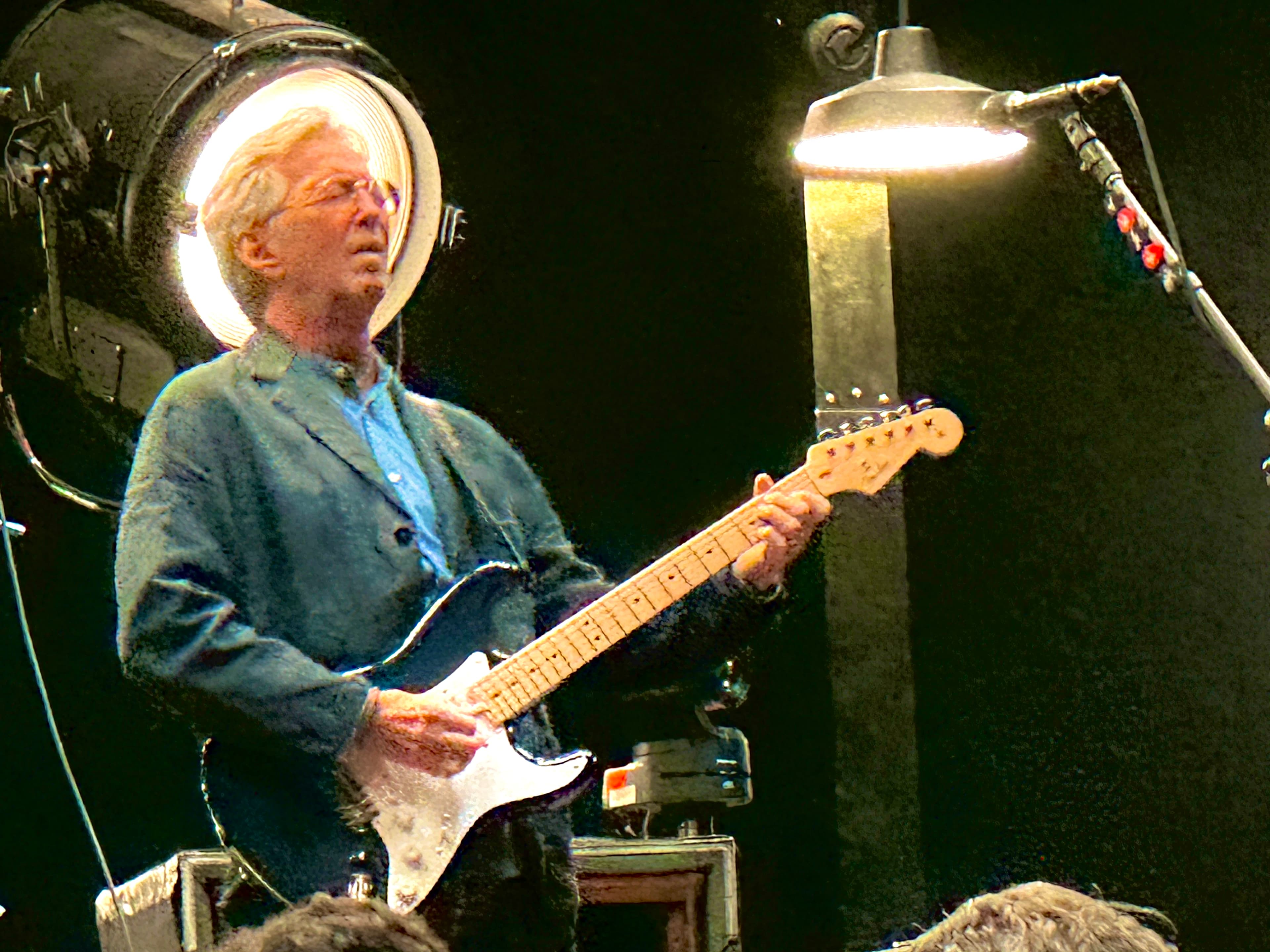
Eric Clapton Practice Routine: How Slowhand Mastered the Blues
Eric Clapton's nickname "Slowhand" reflects his approach to guitar: every note carefully chosen, every bend perfectly executed, every phrase dripping with emotion. From his groundbreaking work with John Mayall's Bluesbreakers and Cream to his legendary solo career, Clapton has defined what it means to play blues guitar with taste and restraint.
But how did a young kid from Surrey, England become one of the world's most revered blues guitarists? The answer lies in his obsessive practice routine and unwavering dedication to studying the blues masters.
In this article, you'll discover:
- Eric Clapton's early practice routine (8 hours daily)
- His learning method: studying blues records by ear
- Specific techniques: vibrato, bending, and phrasing
- A sample practice routine inspired by Clapton's approach
The Early Years: 8 Hours a Day with a Tape Recorder
The Obsessive Student
During his teenage years, Eric Clapton practiced up to 8 hours a day, according to research documented by Strings Direct. But Clapton's practice wasn't about running scales mindlessly—it was about deep immersion in the blues.
According to Deplike's research on Clapton's journey, his method was remarkably focused:
"Eric Clapton learned to play the guitar by ear. He would gather blues records, tape them with his reel-to-reel recorder, then play back individual phrases until they were perfect."
The Tape Recorder Method
Here's exactly how Clapton practiced:
- Collect blues records from artists like B.B. King, Albert King, Freddie King, Robert Johnson, and Muddy Waters
- Record phrases on his reel-to-reel tape recorder
- Loop short sections (sometimes just 2-4 bars)
- Play along until he matched the tone, phrasing, and feel
- Repeat obsessively until the phrase was internalized
"Clapton sat on a bench in the village square with a tape recorder and a guitar, going over and over and over parts of songs 'til he got the whole thing right."
Key Insight: Clapton wasn't just learning notes—he was absorbing the soul and spirit of blues guitar. He devoted years to understanding not just what the blues masters played, but how and why they played it.
Clapton's Practice Philosophy
Focus on One Thing: The Blues
In a 1968 interview, Clapton revealed his approach:
"Yeah, there are phrases that I always play, stock phrases that I work from."
According to Strings Direct's analysis, Clapton's philosophy was simple but powerful:
"If you really want to become a proficient blues guitarist, learn from Eric Clapton and take the same approach. Focus your practice and attention on the blues. Don't allow yourself to get distracted by material that doesn't make you a better blues guitarist."
Modern Application: Many guitarists try to learn everything at once—rock, jazz, metal, classical. Clapton's approach suggests a different path: master one genre deeply before branching out. Depth beats breadth.
Learn by Ear, Not by Tab
Clapton developed his incredible ear by forcing himself to learn everything without sheet music or tabs. This approach:
- Trains your ear to recognize intervals, phrasing, and tone
- Develops intuition for what sounds "right"
- Forces you to listen closely to every nuance
- Builds confidence in your ability to figure things out
Practice Tip: Pick one blues solo (like B.B. King's "The Thrill Is Gone") and learn it entirely by ear. Don't look up tabs. Slow down the recording, loop sections, and figure it out note by note.
"Less Is More" Approach
Clapton is famous for his restraint. While other guitarists of his era were racing up and down the fretboard, Clapton focused on economy of motion and eloquent phrasing.
"The key to developing Clapton's style is understanding that he chooses each note carefully, and uses pauses, bends, and slides to give his playing a vocal quality."
Philosophy: Don't play because you can—play because the music calls for it. Every note should have intention.
Eric Clapton's Signature Techniques
1. The "Floating" Vibrato
Clapton's vibrato is one of the most distinctive in rock and blues. According to Blues Guitar Unleashed's detailed analysis, Clapton uses a unique technique:
"Clapton uses a 'floating' vibrato technique where he removes his hand from the back of the guitar neck, maintaining only the finger he's using to apply vibrato as the point of contact."
How It Works:
- Unlike traditional vibrato initiated from the wrist, Clapton initiates movement from the forearm
- His hand "floats" without touching the back of the neck
- This creates a slow, sweeping vibrato perfect for blues
Practice Exercise:
- Fret a note on the G string (12th fret works well)
- Remove your thumb from the back of the neck
- Use your forearm to rock the string up and down
- Start with slow, wide vibrato
- Sustain for 10+ seconds
Clapton's Vibrato Variations: According to Guitar Freaks Blog, Clapton mixes:
- Slow vibrato for bluesy, mournful tones
- Fast vibrato for intensity and climactic moments
- No vibrato for stark, raw emotion
Key Lesson: Vibrato isn't just decoration—it's expression. Clapton uses vibrato speed and width to convey different emotions.
2. String Bending: The Vocal Approach
Clapton's bends are smooth, controlled, and vocal-like. His signature bending techniques include:
Unison Bends
According to Happy Bluesman's style study:
"Two of the most significant techniques that Clapton utilized were his use of double stops and unison bends, which he included especially in his early playing and really added weight to his lead work."
What's a Unison Bend?
- Play two notes on adjacent strings
- Bend the lower note up to match the pitch of the higher note
- Both strings ring together in unison
Example:
- Fret the B string at the 15th fret (high E note)
- Fret the G string at the 14th fret (D note)
- Bend the G string up a whole step to match the E
- Strike both strings together
Sliding Into Bends
"Clapton often slides into bends for a smoother, more vocal-like sound."
Practice Exercise:
- Start 2 frets below your target note
- Slide up while simultaneously beginning the bend
- Reach pitch at the target fret
- Add vibrato at the top of the bend
3. The "Woman Tone"
During his Cream years, Clapton pioneered the "Woman Tone"—a thick, singing lead tone with reduced treble. He achieved this by:
- Rolling off the tone knob on his Les Paul
- Using the neck pickup
- Cranking the amp into natural overdrive
- Playing with smooth legato technique
Modern Recreation:
- Use a Les Paul or humbucker-equipped guitar
- Neck pickup position
- Tone knob at 2-3 (out of 10)
- Medium to high gain
- Focus on smooth, connected phrasing
4. Pentatonic Mastery
Like all great blues guitarists, Clapton is a master of the minor pentatonic scale. But what sets him apart is how he uses it.
Clapton's Pentatonic Approach:
- Uses pauses and space between phrases
- Focuses on bends and vibrato over speed
- Connects positions with slides
- Adds chromatic passing tones for color
- Repeats memorable licks (his "stock phrases")
Practice Tip: Learn the minor pentatonic in all 5 positions, but spend 80% of your time on positions 1 and 2—these are where Clapton does most of his work.
Clapton's Blues Influences: Who He Studied
Understanding Clapton's influences is key to understanding his style. He spent years studying:
The Three Kings
B.B. King
- Vibrato technique
- Space and restraint
- Emotional expression
Albert King
- Aggressive string bending
- Minor pentatonic mastery
- Powerful tone
Freddie King
- Rhythmic approach
- Electric Texas blues style
- Instrumental compositions
The Delta Bluesmen
Robert Johnson
- Emotional intensity
- Acoustic fingerstyle (Clapton's "Unplugged" inspiration)
Muddy Waters
- Chicago electric blues
- Amplified slide guitar
Clapton's Approach: He didn't copy any one player—he synthesized elements from all his heroes into his own voice.
Sample 60-Minute Eric Clapton-Inspired Routine
Here's a practice routine based on Clapton's methods:
Warmup & Ear Training (15 minutes)
- 5 min: Fret-hand stretches and chromatic exercises
- 10 min: Put on a blues song (B.B. King, Albert King, etc.)
- Listen to a 2-bar phrase
- Pause and try to play it back by ear
- Repeat until you nail it
- Move to the next phrase
Vibrato & Bending Practice (15 minutes)
- 5 min: Floating vibrato exercise
- Sustain notes on different strings
- Practice slow, wide vibrato
- Remove thumb from neck back
- 5 min: String bending
- Half-step bends (accurate pitch)
- Whole-step bends
- Unison bends on G and B strings
- 5 min: Slides into bends
- Combine techniques
Pentatonic Scale Work (15 minutes)
- 5 min: Minor pentatonic scale, position 1 (root on 6th string)
- Play ascending and descending
- Add bends and vibrato to each note
- 5 min: Minor pentatonic scale, position 2 (root on 5th string)
- Same approach
- 5 min: Connect positions 1 and 2 with slides
Learn a Blues Solo by Ear (15 minutes)
- Pick ONE classic Clapton solo:
- "Crossroads" (Cream version)
- "Hideaway" (John Mayall's Bluesbreakers)
- "Have You Ever Loved a Woman" (Derek and the Dominos)
- Learn just the first 8 bars by ear today
- Focus on tone, phrasing, and feel—not just notes
Essential Eric Clapton Songs to Learn
Early Bluesbreakers Era
- "Hideaway" – Pure Chicago blues, aggressive tone
- "All Your Love" – Classic British blues rock
- "Steppin' Out" – Extended blues jam
Cream Era
- "Crossroads" – Legendary live performance, essential blues rock
- "White Room" – Psychedelic blues, wah-wah usage
- "Sunshine of Your Love" – Iconic riff and solo
Solo Career
- "Layla" – Epic slide guitar and dueling leads (with Duane Allman)
- "Wonderful Tonight" – Tasteful, melodic lead work
- "Tears in Heaven" – Emotional fingerstyle acoustic
Acoustic/Unplugged
- "Old Love" – Slow blues, incredible phrasing
- "Malted Milk" – Acoustic Delta blues
- "Nobody Knows You When You're Down and Out" – Ragtime blues
Eric Clapton's Gear
Guitars
Early Career (Bluesbreakers Era):
- 1960 Gibson Les Paul Standard (aka "Beano" burst)
- Created the "Bluesbreakers tone"—thick, singing sustain
Cream Era:
- Gibson SG "The Fool" (psychedelic painted)
- Gibson ES-335
Solo Career:
- Fender Stratocaster (his main guitar since the 1970s)
- Signature Fender "Blackie" and "Brownie" Strats
- Martin acoustic guitars (Signature models)
Amps & Effects
Classic Setup:
- Marshall Bluesbreakers combo (1962 model)
- Fender Twin Reverb (cleaner tones)
- Dallas Rangemaster Treble Booster (for grit)
- Vox Wah-Wah pedal (Cream era)
Modern Setup:
- Fender Signature "EC" amps
- Custom-designed pedals
- Studio-quality effects for touring
Frequently Asked Questions
How did Eric Clapton learn guitar?
Clapton taught himself by listening to blues records and figuring out the parts by ear. He used a reel-to-reel tape recorder to isolate phrases and practiced them obsessively until perfect—sometimes spending hours on just a few bars.
How many hours did Eric Clapton practice?
During his formative years (teens and early 20s), Clapton practiced up to 8 hours daily. His focus was exclusively on blues guitar, studying masters like B.B. King, Albert King, and Robert Johnson.
What makes Eric Clapton's playing style unique?
Clapton is known for:
- Vocal-like phrasing with expressive bends and vibrato
- Restraint and space (playing fewer notes, but with more meaning)
- Smooth tone with emphasis on sustain and clarity
- Blues-based approach applied across rock, pop, and acoustic styles
What's the best Eric Clapton song to learn first?
Start with "Wonderful Tonight" for melodic lead work, or "Crossroads" (live version) for blues rock intensity. Both showcase his signature techniques but are achievable for intermediate players.
Did Eric Clapton use tabs or sheet music?
No. Clapton learned entirely by ear, which developed his exceptional ability to play by feel and intuition. This approach forced him to listen deeply and understand the music, not just memorize patterns.
The Takeaway: Play with Your Heart
Eric Clapton's practice routine wasn't about shredding or technical gymnastics. It was about connecting emotionally with the music and letting that emotion guide every note.
Key Lessons from Slowhand:
- Focus deeply on one style before branching out
- Learn by ear to develop intuition and musicality
- Less is more—choose notes carefully, leave space
- Master vibrato and bending—these are your voice
- Study the masters who came before you
- Play what you feel, not just what you can
Even 1 hour of intentional, ear-focused practice beats 5 hours of mindlessly running scales.
Practice Like the Blues Masters on RiffRoutine
Ready to develop blues guitar skills with structured practice routines? RiffRoutine offers:
- Blues-focused practice schedules based on legendary players
- Ear training exercises to learn by listening
- Technique tracking for bends, vibrato, and phrasing
- Progress logging to see your improvement over time
Sources
This article is based on verified information from:
- Strings Direct: 5 Guitar Lessons You Can Learn From Eric Clapton
- Happy Bluesman: 10 Lessons You Can Learn From Eric Clapton
- Deplike: Eric Clapton's Journey to Guitar Mastery
- Blues Guitar Unleashed: Guitar Vibrato Breakdown
- Happy Bluesman: Eric Clapton Style Study
- Guitar Freaks Blog: 6 Tips to Play Like Slowhand
Tags
Recommended Practice Tools
Free apps to help you practice what you just learned

Guitar Progression Generator
Generate infinite chord progressions for any style and key

Scale Master Guitar
Master every scale with visual fretboard patterns and positions


Polyrhythmic Metronome
Master complex polyrhythmic patterns and odd time signatures
Get All 4 Apps Free with Elite
Guitar Progression Generator + Scale Master Guitar + Ear N Play + Polyrhythmic Metronome
Over $160 in app value — included in your $14.99/mo Elite subscription
Get Your Free AI Practice Routine
Tell us your skill level, goals, and available time — our AI builds a personalized 7-day practice plan in seconds.
Generate My RoutineRelated Articles
John Mayer Practice Routine: How He Practices Guitar
Discover John Mayer's guitar practice routine based on interviews and masterclasses. Learn his approach to technique, improvisation, and musical expression.
Steve Vai Practice Routine: The Legendary 10-Hour Guitar Workout
Discover Steve Vai's famous 10-hour guitar workout and practice philosophy. Learn the exact exercises and techniques that shaped one of rock's greatest virtuosos.
Blues Guitar Practice: Complete Guide to Playing Like the Legends
Learn how to practice blues guitar with proper technique, scales, bending, and vibrato. Includes practice routines for beginner, intermediate, and advanced players.